News

How Can an SCR Dual-Reactor Evaluation Unit Improve Catalyst Testing and Research Accuracy

2026-10-27 0 Leave me a message

Article Summary: An SCR Dual-Reactor Evaluation Unit is a valuable tool for researchers and engineers who need to evaluate selective catalytic reduction (SCR) catalysts under controlled laboratory conditions. By supporting structured testing and comparative analysis, a dual-reactor configuration can help laboratories investigate catalyst activity, operating conditions, and performance consistency. This article explains the working principles, potential advantages, key selection criteria, and practical applications of the SCR Dual-Reactor Evaluation Unit from XINYU HUACHUANG, helping research teams make informed decisions when selecting catalyst evaluation equipment.

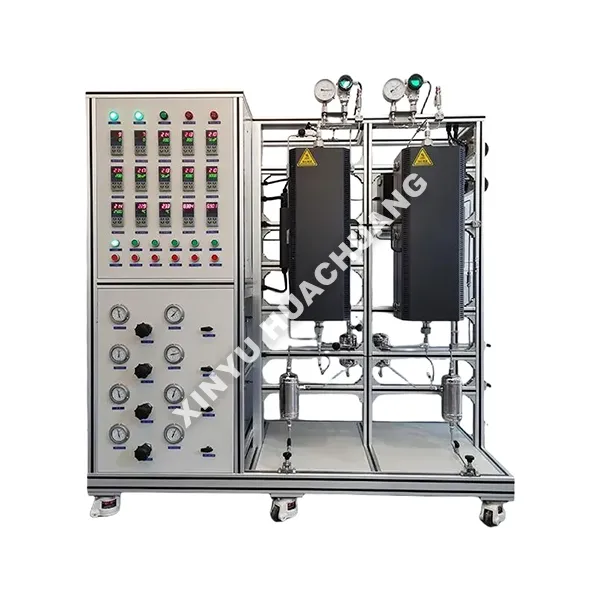
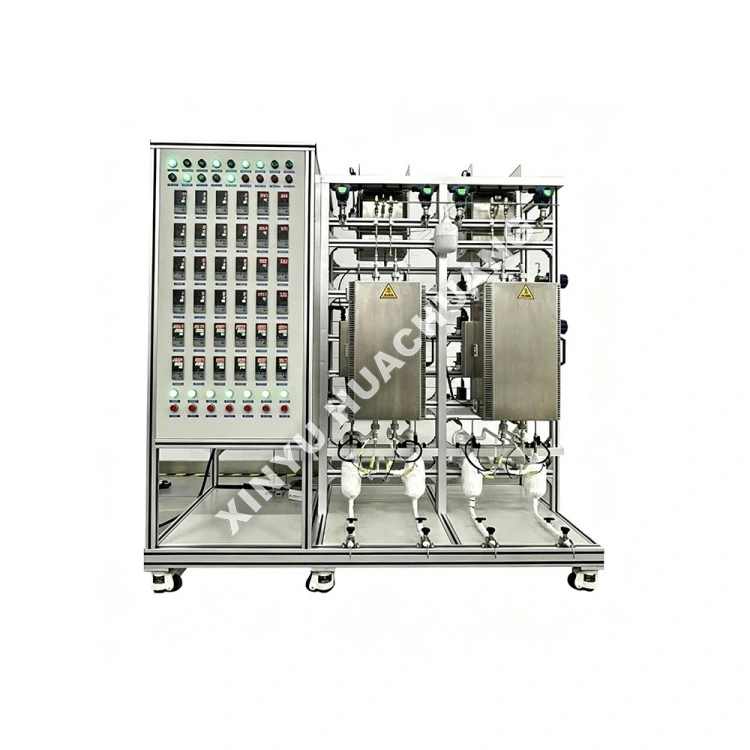
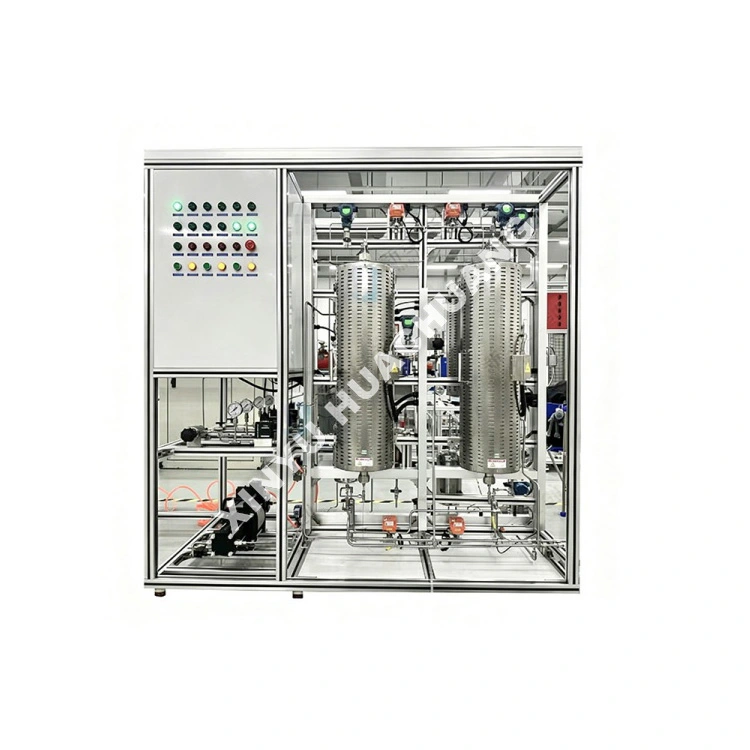
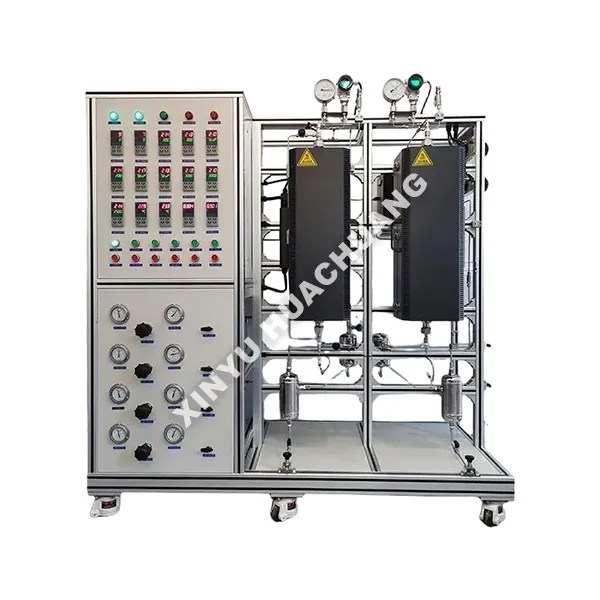
SCR Dual-Reactor Evaluation Unit

Table of Contents


What Is an SCR Dual-Reactor Evaluation Unit?

XINYU HUACHUANG provides specialized equipment for laboratory research and chemical reaction evaluation, including solutions designed for investigating catalytic reaction processes. An SCR Dual-Reactor Evaluation Unit is intended to support the evaluation of catalysts used in selective catalytic reduction, a widely applied technology for reducing nitrogen oxide (NOx) emissions from industrial exhaust gases.

In a typical SCR process, a nitrogen-containing reducing agent, commonly ammonia, reacts with nitrogen oxides over a suitable catalyst to produce nitrogen and water. The actual reaction performance depends on several factors, including catalyst composition, temperature, gas composition, flow rate, and operating conditions.

A dual-reactor evaluation arrangement provides two reactor channels or reaction units for structured testing. Depending on the equipment configuration, researchers may use the reactors to compare catalyst samples, investigate operating conditions, or evaluate different experimental variables within a controlled test program.

For laboratories developing emissions-control technologies, this approach can make experimental planning more flexible and provide a practical foundation for systematic catalyst research.


How Does a Dual-Reactor Evaluation System Work?

The operating principle of an SCR evaluation system is based on preparing a controlled gas mixture, passing the mixture through a catalyst bed, and measuring changes in gas composition under specified reaction conditions.

A typical laboratory testing workflow involves the following stages:

  1. Feed-gas preparation: The required gases are supplied and mixed according to the experimental plan. Depending on the application, the mixture may include NO, NO2, oxygen, nitrogen, ammonia, and water vapor.
  2. Flow regulation: Flow-control devices establish the intended gas feed rates and mixture proportions.
  3. Temperature conditioning: Heating and temperature-control components bring the gas stream and reactor to the required test conditions.
  4. Catalytic reaction: The prepared gas passes through the catalyst bed, where SCR reactions may convert nitrogen oxides into nitrogen and water.
  5. Product-gas analysis: Suitable analytical instruments measure inlet and outlet gas concentrations to assess conversion and other performance indicators.
  6. Data recording: Test conditions and measurement results are recorded for comparison, interpretation, and subsequent research.

When two reactor channels are available, the experimental design can potentially support parallel or comparative studies. However, whether both reactors can operate independently, share gas-supply components, or use separate analytical instruments depends on the actual system design.

Researchers should therefore confirm the available operating modes, control architecture, and measurement configuration before establishing a detailed testing protocol.


What Are the Main Advantages of Dual-Reactor Evaluation?

The primary value of an SCR Dual-Reactor Evaluation Unit lies in its potential to support more structured catalyst testing. The benefits depend on reactor independence, instrumentation, automation, and the intended research application.

1. More Flexible Experimental Planning

Two reactor channels can provide additional options for organizing experiments. For example, a laboratory may investigate two catalyst formulations under comparable conditions or examine different operating temperatures as part of a planned study.

This flexibility can help researchers organize experiments more efficiently, provided that the equipment supports the required operating arrangement.

2. Comparative Catalyst Assessment

Catalyst development often involves comparing materials with different compositions, structures, or preparation methods. A dual-reactor configuration may facilitate side-by-side evaluation when the gas conditions, temperature profiles, and measurement procedures are sufficiently comparable.

For reliable comparisons, researchers should account for differences in catalyst mass, geometry, pretreatment, gas residence time, and analytical uncertainty.

3. Better Experimental Reproducibility

Reproducibility depends on controlling and documenting critical operating parameters. Appropriate flow regulation, temperature monitoring, stable gas delivery, and consistent data collection can help researchers identify meaningful performance differences rather than variations caused by experimental conditions.

4. More Informative Research Data

Structured evaluation can provide data for examining catalyst activity, temperature-dependent behavior, NOx conversion, and the influence of selected operating variables. Where appropriate analytical equipment is available, researchers can also investigate ammonia slip and the formation of unwanted by-products.

These measurements support evidence-based decisions during catalyst screening, formulation development, and process optimization.


Where Is an SCR Dual-Reactor Evaluation Unit Used?

SCR catalyst evaluation equipment is relevant to research activities in environmental engineering, industrial emissions control, catalyst development, and chemical reaction engineering.

  • Catalyst formulation research: Compare candidate catalyst materials and investigate the effects of formulation changes.
  • Temperature-window studies: Evaluate how catalytic performance changes across selected reaction temperatures.
  • Operating-condition optimization: Study the influence of gas composition, space velocity, and reducing-agent concentration.
  • Industrial exhaust treatment research: Investigate catalysts intended for applications involving boilers, furnaces, power-generation systems, or other suitable exhaust streams.
  • Academic research and education: Support controlled experiments in catalysis, reaction engineering, and emissions-reduction technology.
  • Catalyst stability investigations: Examine performance changes during extended testing or selected aging procedures when the system supports those conditions.

Laboratory results should be interpreted within the limits of the test conditions. Performance measured with a small catalyst sample does not automatically predict full-scale reactor performance because industrial systems may involve different flow distributions, heat transfer, contaminants, and operating transients.


What Components Should Researchers Evaluate?

The performance of an SCR evaluation system depends on the coordinated operation of its gas-delivery, reaction, measurement, and control functions. The exact components of the XINYU HUACHUANG configuration should be confirmed against the relevant product documentation.

System component Primary function What to verify
Gas supply and mixing Provides the required reactant mixture Supported gases, concentration range, compatibility, and mixing performance
Flow-control system Regulates gas feed rates Flow range, accuracy, repeatability, and calibration requirements
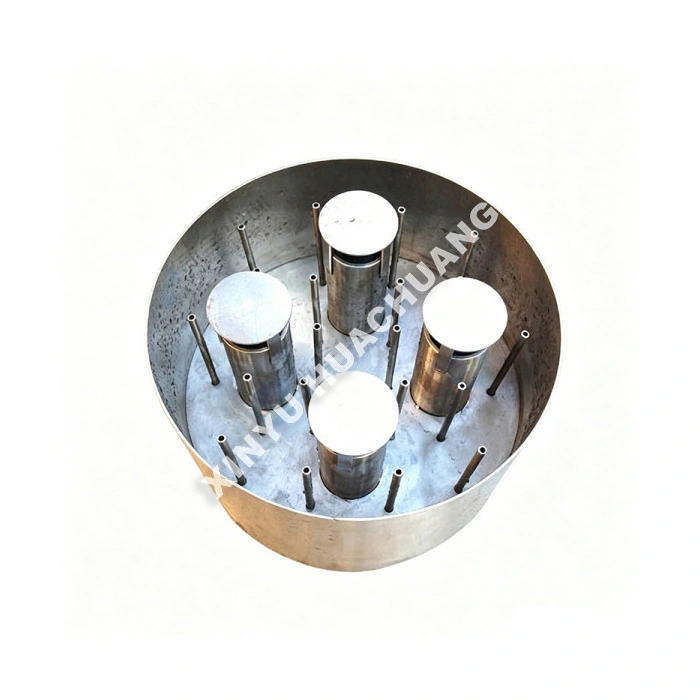
Reactor assembly Houses the catalyst and supports the reaction Reactor material, dimensions, pressure rating, and catalyst-loading method
Heating and temperature control Establishes the required reaction conditions Operating range, temperature uniformity, and control accuracy
Gas analysis instruments Measures inlet and outlet gas composition Target gases, detection limits, calibration, and sampling arrangement
Control and data acquisition Coordinates operation and records measurements Automation functions, data export, alarms, and independent reactor control
Gas handling and safety devices Supports safe operation and exhaust management Leak prevention, ventilation, interlocks, and approved gas-treatment arrangements

For dependable results, the measurement system must be suitable for the expected gas concentrations and operating environment. Researchers should also consider potential interference between measured species and confirm that the sampling system does not introduce significant measurement bias.


Dual-Reactor vs. Single-Reactor Testing

The choice between single-reactor and dual-reactor equipment depends on research objectives, available laboratory resources, and the complexity of the intended test program.

Evaluation criterion Single-reactor system Dual-reactor system
Experimental arrangement One primary reaction channel Two reaction channels, subject to configuration
Catalyst comparison Often requires sequential tests May support comparative or parallel tests
Operating-condition studies Tests conditions sequentially May allow different conditions to be studied in separate reactors
Equipment complexity Generally simpler May require more controls, instrumentation, and coordination
Space and utilities Potentially lower requirements Depends on reactor layout and shared or independent utilities
Best-fit application Routine testing and focused experiments Comparative studies and more flexible research programs

A dual-reactor system does not automatically guarantee higher accuracy or shorter testing time. Those outcomes depend on whether the equipment supports simultaneous operation, how consistently the two channels are controlled, and whether the analytical system can produce comparable measurements.

For a fair comparison, laboratories should establish equivalent reference conditions, use validated measurement methods, and document the uncertainty associated with each channel.


How to Select the Right Evaluation Unit

Selecting an SCR Dual-Reactor Evaluation Unit requires more than checking the number of reactors. The equipment must match the intended catalyst samples, test gases, operating conditions, and data requirements.

Define the Research Objective

Determine whether the primary goal is catalyst screening, temperature optimization, reaction-mechanism research, durability testing, or comparison of different formulations. The research objective determines which measurement functions and operating modes are essential.

Confirm the Operating Envelope

Ask the supplier to specify the available operating ranges for:

  • Reaction temperature and temperature-control accuracy.
  • Gas flow rates and supported gas compositions.
  • Operating pressure and reactor design pressure.
  • Catalyst sample size, geometry, and loading method.
  • Water-vapor introduction, if required by the experiment.
  • Continuous operation, sampling, and exhaust handling.

Do not assume that any particular numerical range is standard. The required limits should be matched to the experimental protocol and verified in the equipment specification.

Review the Measurement and Control Functions

Ask whether the two reactors can be controlled independently, whether they share feed-gas lines, and how temperatures and flow rates are monitored. Confirm which gas analyzers are included, which are optional, and whether results can be exported for further analysis.

Assess Safety and Laboratory Compatibility

SCR experiments may involve ammonia, heated surfaces, compressed gases, and potentially hazardous exhaust mixtures. Confirm that the equipment design, gas connections, ventilation requirements, emergency shutdown provisions, and exhaust treatment are appropriate for the intended use.

Laboratories should establish operating procedures and risk assessments before commissioning the equipment.

Evaluate Technical Support

Supplier support can be important when configuring a specialized evaluation platform. Review the availability of technical documentation, installation guidance, operator training, maintenance instructions, spare parts, and assistance with application-specific requirements.


Best Practices for Reliable Catalyst Testing

A well-planned test procedure improves data quality and makes experimental findings easier to reproduce. The following practices are useful when working with an SCR Dual-Reactor Evaluation Unit.

  1. Establish a baseline: Record the initial operating conditions and verify that flow controllers, temperature sensors, and analytical instruments are functioning correctly.
  2. Prepare catalyst samples consistently: Document catalyst mass, dimensions, pretreatment, and loading procedure.
  3. Stabilize operating conditions: Allow the system to reach the required temperature and flow conditions before collecting measurements used for comparison.
  4. Use a defined test matrix: Change selected variables systematically instead of changing several parameters without a clear experimental plan.
  5. Check analytical performance: Apply appropriate calibration procedures and verify that measured gas concentrations fall within the instruments' valid ranges.
  6. Record complete test information: Preserve gas composition, flow rate, temperature, pressure, catalyst details, timestamps, and relevant instrument settings.
  7. Repeat critical measurements: Use replicate tests where practical to distinguish reproducible trends from experimental variation.
  8. Follow safe shutdown procedures: Purge or isolate gases as required by the approved operating procedure and allow heated components to cool safely.

One commonly used performance indicator is NOx conversion efficiency, calculated from inlet and outlet NOx concentrations when the measurements and sampling basis are comparable:

NOx Conversion (%) = [(Inlet NOx Concentration − Outlet NOx Concentration) / Inlet NOx Concentration] × 100

Researchers should account for dilution, flow changes, wet-versus-dry measurement bases, and other relevant analytical factors when applying this calculation. Conversion efficiency alone does not fully characterize catalyst performance; ammonia slip, selectivity, stability, and pressure drop may also be important.


Frequently Asked Questions

1. What is the main purpose of an SCR Dual-Reactor Evaluation Unit?

Its main purpose is to support controlled evaluation of selective catalytic reduction catalysts. Depending on its configuration, the system may help researchers compare catalyst samples, investigate reaction conditions, and collect data on NOx conversion and other relevant performance indicators.

2. Can two catalysts be tested simultaneously?

Potentially, yes. Simultaneous testing depends on whether the two reactors can operate independently and whether the gas supply, temperature controls, and analytical instruments support parallel experiments. Confirm these capabilities with the supplier before planning a comparative test.

3. Which gases may be required for SCR catalyst evaluation?

Typical test mixtures may include nitrogen oxides, oxygen, nitrogen, ammonia, and water vapor. The actual gas composition depends on the research objective, catalyst chemistry, and intended application. Gas compatibility and safety requirements should be confirmed before operation.

4. How is catalyst performance evaluated?

Researchers commonly assess NOx conversion efficiency under defined operating conditions. Depending on the available instruments and experimental objectives, additional indicators may include ammonia slip, selectivity, reaction-temperature response, stability over time, and pressure drop.

5. Does a dual-reactor system always produce more accurate results?

No. Two reactors can expand experimental flexibility, but accuracy depends on calibration, temperature uniformity, flow control, sampling methods, instrument performance, and experimental design. Comparative results require suitable controls and documented measurement uncertainty.

6. What information should be provided when requesting a quotation?

Provide the intended application, catalyst type and sample dimensions, target gases, required temperature and pressure ranges, expected flow rates, analytical requirements, automation preferences, and laboratory utility constraints. This information helps the supplier determine whether the proposed configuration matches the test requirements.

7. Can the equipment be customized for specific research requirements?

Customization depends on the manufacturer's available engineering capabilities and the requested operating conditions. Discuss reactor configuration, gas-delivery requirements, measurement functions, control modes, and safety provisions with XINYU HUACHUANG to establish a suitable technical specification.


Conclusion

An SCR Dual-Reactor Evaluation Unit can be a valuable platform for laboratories investigating catalyst activity, comparing formulations, and optimizing selective catalytic reduction processes. Its practical value depends on the suitability of the reactor arrangement, gas-delivery system, temperature controls, analytical instruments, and data-management functions for the intended experiments. Careful equipment selection, consistent testing procedures, and reliable measurement practices are essential for producing meaningful research results. To discuss your catalyst evaluation objectives, operating requirements, or potential equipment configuration, contact us at XINYU HUACHUANG. Our team can help you clarify your technical needs and explore an appropriate SCR Dual-Reactor Evaluation Unit solution for your laboratory.

Related News
Leave me a message
X
We use cookies to offer you a better browsing experience, analyze site traffic and personalize content. By using this site, you agree to our use of cookies. Privacy Policy
RejectAccept