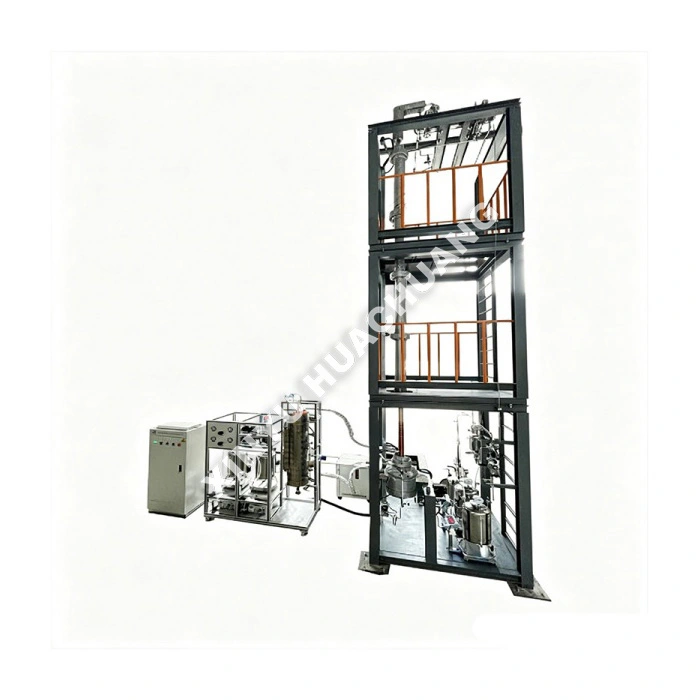
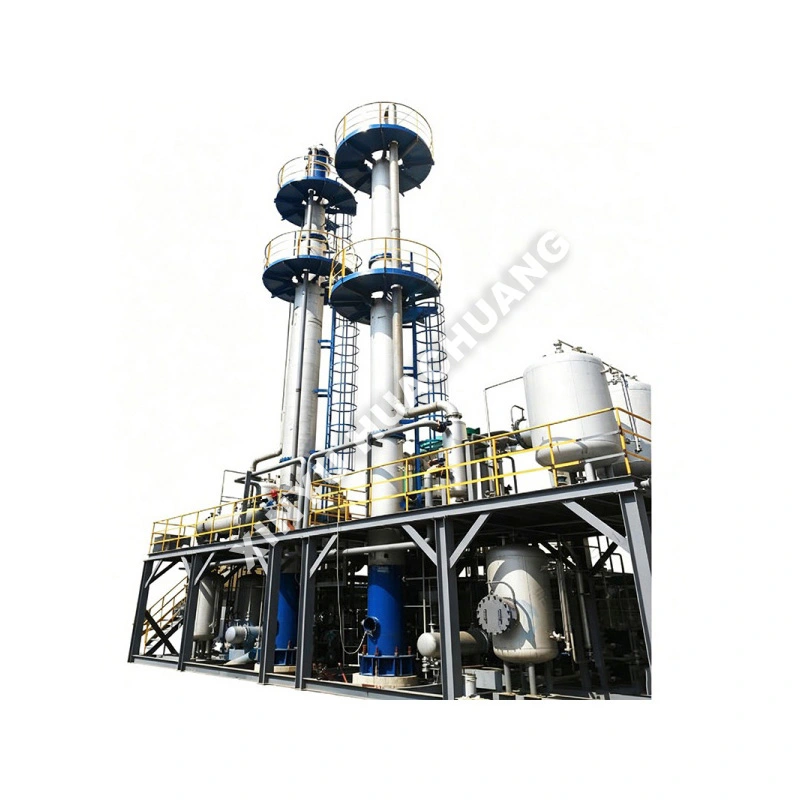
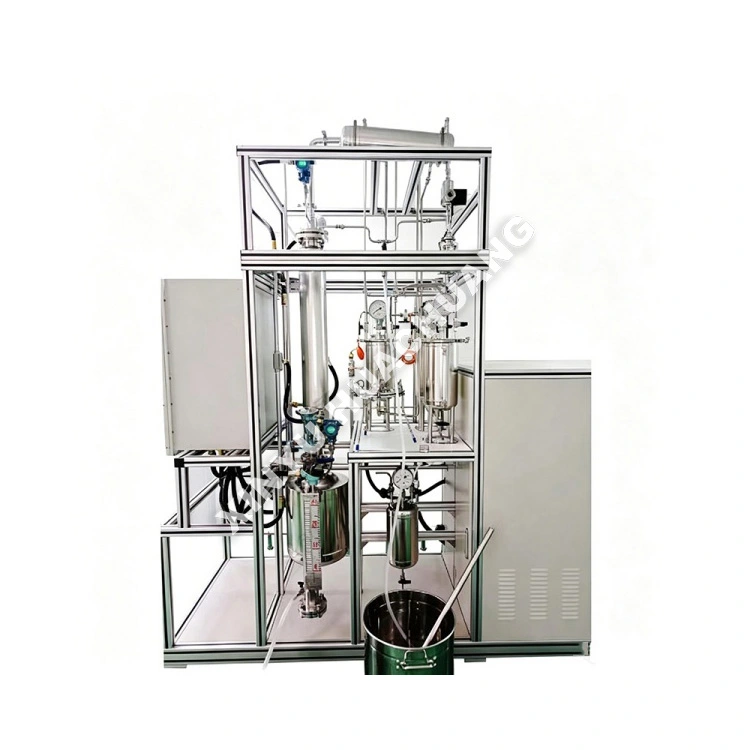
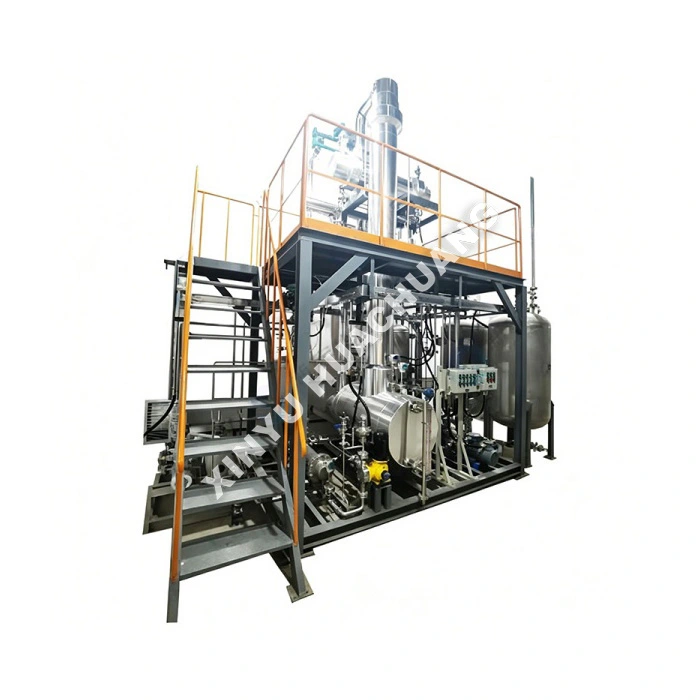
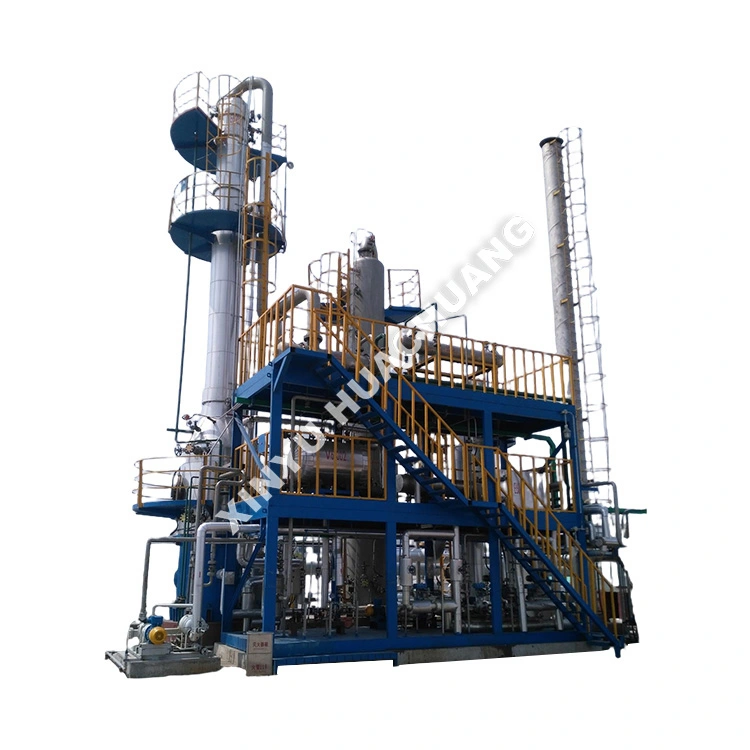
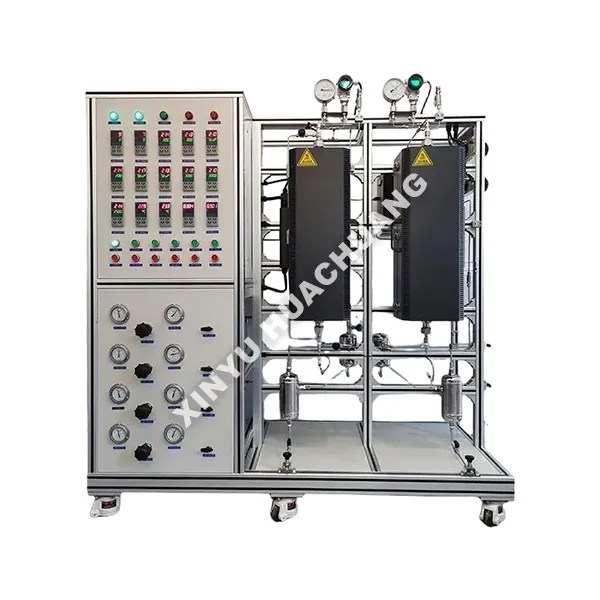
Dehydration distillation units are distillation systems used to remove water or reduce moisture content from organic solvents and liquid mixtures. These units typically include a reboiler, distillation column, column internals, condenser, reflux divider, water collection section, temperature and pressure measurement and control instrumentation.
They are suitable for separating water-organic mixtures, recovering dry solvents, evaluating azeotropic dehydration feasibility and testing dehydration parameters under controlled conditions. Depending on the mixture, the system may operate with azeotropic distillation, extractive distillation, vacuum dehydration or other process configurations.
What Are the Typical Specifications?
|
Item
|
Typical Range
|
|
System type
|
Skid-mounted laboratory or pilot dehydration distillation unit
|
|
Column diameter
|
Customized according to capacity
|
|
Column height
|
Determined by separation requirement
|
|
Column internals
|
Structured packing, random packing or tray section
|
|
Heating method
|
Electric heating, oil bath or other configured method
|
|
Condenser type
|
Shell-and-tube, coil or customized condenser
|
|
Operating mode
|
Atmospheric, vacuum or combined mode
|
|
Control system
|
Temperature, reflux and pressure monitoring
|
|
Material option
|
Glass, stainless steel or corrosion-resistant material
|
|
Application
|
Solvent dehydration, azeotropic separation and water removal
|
Final specifications are confirmed after reviewing feed composition, water content, boiling point data, expected throughput, product dryness and installation conditions.
What Should Be Considered During Operation?
Before startup, confirm the water content, azeotropic behavior, boiling point difference, thermal sensitivity and corrosion characteristics of the mixture. Check all connections, sealing points, heating devices, temperature sensors, reflux control and collection vessels.
During operation, avoid unstable heating, excessive reflux fluctuation or improper water-phase collection. For flammable solvents, ensure proper ventilation, explosion-proof measures and safe electrical configuration. For vacuum dehydration, confirm sealing performance and pressure stability before continuous operation.
As the original manufacturer, XINYU HUACHUANG supplies Dehydration Distillation Units along with Fixed-bed and Multi-channel Catalyst Evaluation Devices, Hydroprocessing Pilot Reaction Units, Batch Distillation Units and Special-Condition Custom Distillation Units. For dehydration tasks involving high-boiling solvents, corrosive media, strict water limits, automated water-cut control or pilot-scale expansion, we can propose a suitable configuration based on your process requirements.
How Should the Units Be Maintained?
After each run, clean the reboiler, column, condenser and collection vessels according to the processed material. Remove residual water, solids or solvent deposits to prevent corrosion, blockage or cross-contamination.
Regularly check sealing components, gaskets, valves, temperature sensors and reflux devices. For vacuum systems, inspect sealing points and vacuum connections before reuse. Keep electrical and control parts dry, and store fragile components in a clean environment when the unit is not in use.
Frequently Asked Questions
1. What types of solvents can be dehydrated?
Dehydration distillation units can handle many organic solvents and water-bearing mixtures, including systems that form azeotropes with water. Final feasibility depends on composition, boiling point relationship and material compatibility.
2. Can the unit operate under vacuum?
Yes. Vacuum operation can be configured for heat-sensitive or high-boiling mixtures. The vacuum level, sealing design and material selection should be confirmed during technical review.
3. How is water separation controlled?
Water removal is usually controlled through reflux management, condensation temperature, phase separation and collection strategy. For systems with obvious water-organic phase separation, a dedicated water collection section can be arranged.
4. Do you provide customized dehydration solutions?
Yes. As the original manufacturer, we provide technical consultation, configuration selection, operation guidance, spare parts supply and after-sales service. For customized skid-mounted dehydration systems, we can also support customers with process matching, commissioning advice and maintenance recommendations.